
Owning a condo in Huntington Beach comes with unique insurance challenges. Shared master policies, unit coverage, and coastal exposure often leave hidden gaps most owners discover only after a claim. Old Harbor Insurance helps condo owners ensure every layer of coverage works together.
The right condo insurance strategy costs far less than dealing with an uninsured loss—and it’s simpler than most owners think once you understand the basics. Keep reading to learn what separates adequate coverage from true peace of mind.
The Condo Insurance Puzzle: What Your HOA Doesn’t Cover
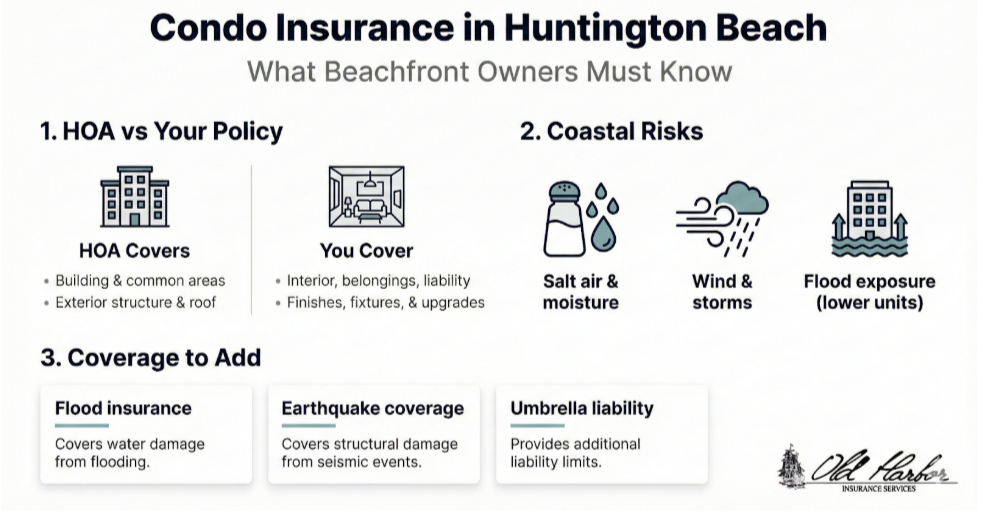
Many condo owners assume the HOA’s master policy covers everything—but it doesn’t. It typically insures only common areas like the roof, structure, and hallways, while excluding your unit’s interior, personal belongings, and personal liability. This creates a serious gap that can leave owners exposed to major losses.
Your personal condo policy—often called an HO-6—is the missing piece. It covers interior elements like walls, flooring, cabinets, personal property, and liability if someone is injured inside your unit. Without it, repairs and legal costs fall entirely on you. Many Huntington Beach condo owners carry only minimal coverage simply because they don’t realize what’s at risk.
Huntington Beach’s Unique Coastal Challenges for Condo Owners
Condo living near the coast comes with exposures inland owners don’t face. In Huntington Beach, salt air accelerates wear on exterior surfaces and HVAC systems, while seasonal storms bring high winds that increase the risk of window damage, balcony issues, and water intrusion. Lower-floor units are especially vulnerable to storm surge and king tide flooding—yet many owners don’t adjust coverage to reflect this added risk.
Why Unit Upgrades Often Go Uncovered
HOA master policies rarely cover interior upgrades such as renovated kitchens, new flooring, or bathroom remodels. If water damage occurs, those improvements aren’t reimbursed unless they’re documented and insured under your personal policy. This is a common reason Huntington Beach condo owners face tens of thousands in uninsured losses after a claim.
Personal Property Coverage: What Actually Gets Replaced
Personal property coverage applies to the items you own—furniture, electronics, clothing, and art—not the structure or permanent upgrades. If your unit floods, your couch may be covered, but costly improvements like hardwood floors often aren’t unless you’ve added specific coverage for them.
In Huntington Beach, coastal moisture and shared-wall plumbing make water damage claims more common. Balcony leaks, roof issues, and plumbing failures increase risk, yet many owners underestimate the value of their belongings. Even a modest two-bedroom condo can hold $50,000–$75,000 in personal property that would need replacing after a loss.
Liability Coverage: Your Financial Protection
Liability coverage pays legal and medical costs if someone is injured in your unit or if damage from your unit affects others.
Common condo liability scenarios include:
- A guest slips on a wet balcony and sues
- A plumbing leak damages the unit below
- Property damage claims tied to shared walls or systems
Most HO-6 policies include about $300,000 in liability coverage, which can be quickly exhausted in a serious injury claim—especially in Huntington Beach, where damage awards tend to be higher. Adding an umbrella policy can extend protection by $1 million or more for only a few hundred dollars per year.
When Master Policies and Unit Policies Don’t Align
Condo insurance works only when the HOA’s master policy and your personal policy are properly coordinated. Problems arise when:
- HOA deductibles (often $50,000 or more) are passed to unit owners
- Coverage stops at the building shell, not your interior finishes
- Unit owners don’t know how their HOA handles claims
If a loss originates from a common area, you may still be responsible for major out-of-pocket costs unless your policy is structured correctly.
How Old Harbor Insurance Helps
Old Harbor Insurance reviews your HOA’s master policy alongside your HO-6 coverage to ensure they work together—not against you. We help Huntington Beach condo owners close liability gaps, manage deductible exposure, and secure umbrella coverage that protects their assets when claims get serious.
Is Flood Insurance Required for Your Huntington Beach Condo?
Standard condo insurance does not cover flood damage, making flood-zone awareness essential. According to Federal Emergency Management Agency flood maps, Huntington Beach condos located in a Special Flood Hazard Area (SFHA) carry a 1% annual flood risk, and lenders require separate flood insurance as a loan condition.
Flood Risk Exists Beyond High-Risk Zones
Even units outside mapped high-risk zones face exposure—especially ground-floor and lower-level condos during king tides, storm surge, and heavy rainfall. Coastal flooding doesn’t stop at FEMA boundaries, and many owners are caught off guard after a loss.
How Flood Coverage Protects Your Condo
A separate flood policy purchased through the National Flood Insurance Program or private insurers is the only way to protect against this exposure. The cost of replacing flooring, drywall, personal property, and HVAC equipment after a flood event easily reaches $30,000-$100,000+, depending on unit size and contents. NFIP flood insurance data shows actual claims and losses across California, demonstrating how frequently condo owners face flood-related expenses.
Earthquake Insurance: What the State Recommends for California Condo Owners
Southern California’s seismic activity creates real earthquake risk for Huntington Beach residents. According to the California Department of Insurance, earthquake damage is completely excluded from standard condo policies and the building’s master policy. A significant quake could damage your unit’s interior, destroy personal property, and crack walls—with no insurance covering any of it unless you’ve purchased a separate earthquake policy.
The California Earthquake Authority (CEA) offers earthquake coverage specifically designed for condo unit owners, including options for loss of use and loss assessment protection. These policies typically provide 15% of your unit’s replacement cost in coverage. For a condo worth $600,000, that means $90,000 in earthquake protection. While this doesn’t cover everything, it’s far better than facing a six-figure loss with no recovery option.
How Old Harbor Insurance Helps Huntington Beach Condo Owners
Condo insurance is more complex than single-family coverage. Old Harbor Insurance helps Huntington Beach condo owners review HOA master policies, identify coverage gaps, and build HO-6 coverage tailored to their unit, contents, and liability.
We go beyond issuing policies by explaining HOA insurance responsibilities, evaluating flood and earthquake exposure, and ensuring your personal coverage works seamlessly with the building’s master policy—delivering protection that’s truly built for condo living.
Your Complete Protection Strategy Awaits
Condo ownership in Huntington Beach brings lifestyle benefits but also unique insurance complexities. The right combination of personal property, liability, flood, and earthquake coverage protects you against the specific risks your building and location present. Old Harbor Insurance has helped hundreds of Orange County condo owners move from confusion to confidence about their coverage.
Ready to review your condo insurance strategy? Call us at (951) 297-9740, email info@oldharbor.com, or get a quote online. One of our licensed agents will contact you within 24 hours to assess your specific unit, review your current coverage, and identify any protection gaps. Your beachfront condo deserves expert coverage.
Frequently Asked Questions
What’s the difference between HO-6 and HO-3 insurance?
HO-3 is for single-family homes and covers the entire structure plus personal property and liability. HO-6 is for condo unit owners and covers only your unit’s interior, personal property, and liability—not the building’s exterior or common areas, which the HOA’s master policy covers. Using HO-3 for a condo leaves you dangerously underinsured.
Does my HOA’s master policy cover water damage to my unit?
That depends on the source of the water and your HOA’s insurance documents. If water comes from a shared roof or common area plumbing, the master policy might cover structural damage, but you’re still responsible for your interior finishes, personal property, and any deductibles the HOA passes to unit owners. Your personal condo policy covers water damage originating inside your unit.
Do I need flood insurance if I’m not in a high-risk zone?
Technically, no—but we recommend it for any ground-floor or lower-level Huntington Beach condo. Flood happens outside designated high-risk areas regularly, and without a separate flood policy, you have zero coverage. The cost is modest compared to potential losses.
How much personal property coverage do I actually need?
Start by calculating the replacement cost of everything you own—furniture, electronics, artwork, clothing, and kitchenware. Most condo owners underestimate this significantly. A typical two-bedroom condo contains $50,000-$75,000 in personal property. Your coverage limit should match or exceed this amount.
Can I just add umbrella coverage and skip earthquake insurance?
Umbrella coverage extends your liability protection but doesn’t cover earthquake or flood damage to your property or belongings. You need all three—personal condo policy, earthquake coverage, and umbrella liability—for complete protection in Huntington Beach.
What happens if the HOA’s master deductible is very high?
High deductibles in the master policy mean you might pay significant costs out-of-pocket for damage from shared areas. Review your HOA documents to understand how deductibles are handled. Your personal policy with a reasonable deductible ($1,000 or less) provides backup protection for your unit’s interior and contents.
How often should I review my condo coverage?
We recommend annual reviews, especially after HOA policy changes, significant unit improvements, or when you add valuable personal property. If you renovate, upgrade systems, or significantly change your unit, your coverage limits should be adjusted to reflect those changes.