
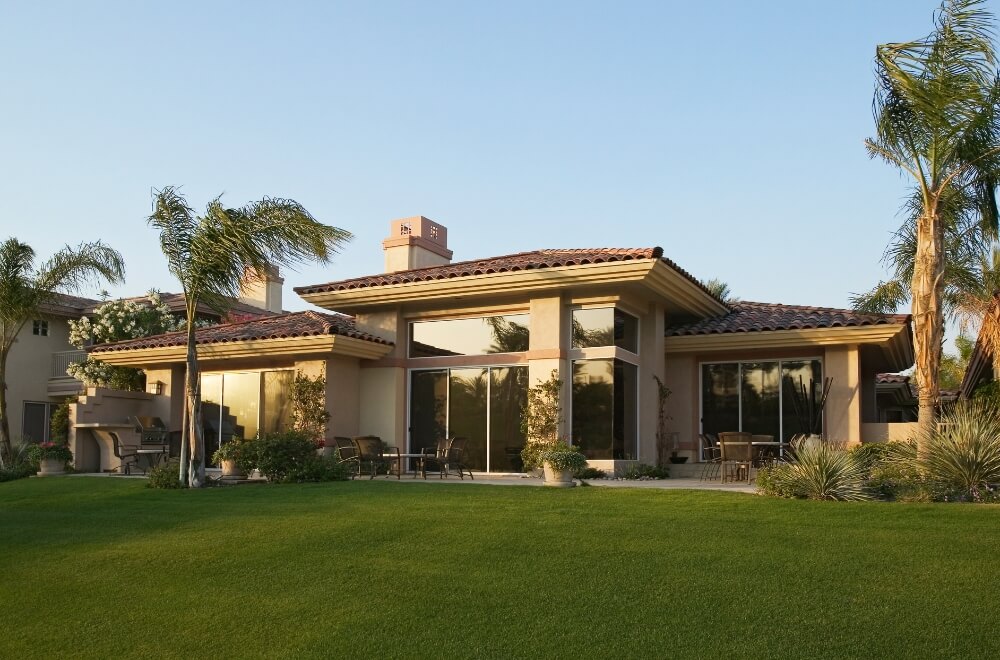
A home can sit empty for very different reasons: an owner spends winters elsewhere, a family is settling an estate, a property is listed for sale, or contractors have opened it for renovation. Insurers do not treat those situations as interchangeable, especially in a California wildfire zone. Insurance alternatives for vacant, seasonal, and second homes depend on the property’s present condition, not the owner’s eventual plan. Old Harbor Insurance starts by identifying whether the property is vacant, merely unoccupied, seasonally occupied, under construction, or used as a rental.
That classification affects which policy forms are available and which losses may be restricted. Furnishings, utilities, alarm monitoring, caretaker visits, rental activity, and the expected return date all matter. Old Harbor can compare coverage for an intermittently occupied property before a long absence, renovation, or change in use creates a mismatch between the application and the way the home is being managed.
Vacant, Unoccupied, Seasonal, and Second Homes Are Different Risks
A furnished second home with utilities on, regular visits, active monitoring, and no renovation is not the same risk as an empty building with disconnected water and no definite return date. Policy definitions vary, so owners should not assume a general 30-day or 60-day rule applies to every contract.
Vacancy Usually Means Less Supervision and More Severe Losses
Vacant properties can experience undetected water leaks, electrical problems, trespass, vandalism, theft, and delayed wildfire discovery. Even when fire remains covered, another cause of loss may be limited after the policy’s vacancy period. Protective-device warranties may also require alarms, heat, water shutoff, or documented inspections.
The owner should disclose when the property became empty, why it is empty, whether it is furnished, how often someone visits, which utilities remain active, and when normal occupancy is expected to resume.
Seasonal Occupancy Can Fit a Specialty Homeowners Form
A second home used predictably throughout the year may qualify for an admitted or specialty homeowners policy. Underwriters commonly ask about the primary residence, distance between homes, property management, rental activity, winterization, alarm systems, roof age, wildfire mitigation, and how long the home is unattended.
Coverage should reflect the belongings kept at each residence. Personal property may be split between policies, and liability can involve pools, guests, caretakers, domestic workers, or recreational vehicles at the secondary location.
Private-Market Insurance Alternatives in Wildfire Zones
The first option is still a standard admitted homeowners policy when one is available. The California Department of Insurance’s Home Insurance Finder lets consumers identify insurers and agents that report writing residential coverage, including companies that may consider higher-fire-risk areas, although listing does not guarantee acceptance.
Admitted and Specialty Homeowners Policies
Some carriers accept seasonal or secondary homes when another policy covers the owner’s primary residence. Others require central-station alarms, automatic water shutoff, local caretaking, no short-term rental, or a minimum number of annual visits. A high wildfire score may add a separate deductible or mitigation conditions.
The application should not describe a future plan as the current reality. A home “intended for occupancy” is still vacant if no one has moved in, and a property under extensive renovation may require a course-of-construction form.
Surplus Lines and Vacant-Dwelling Policies
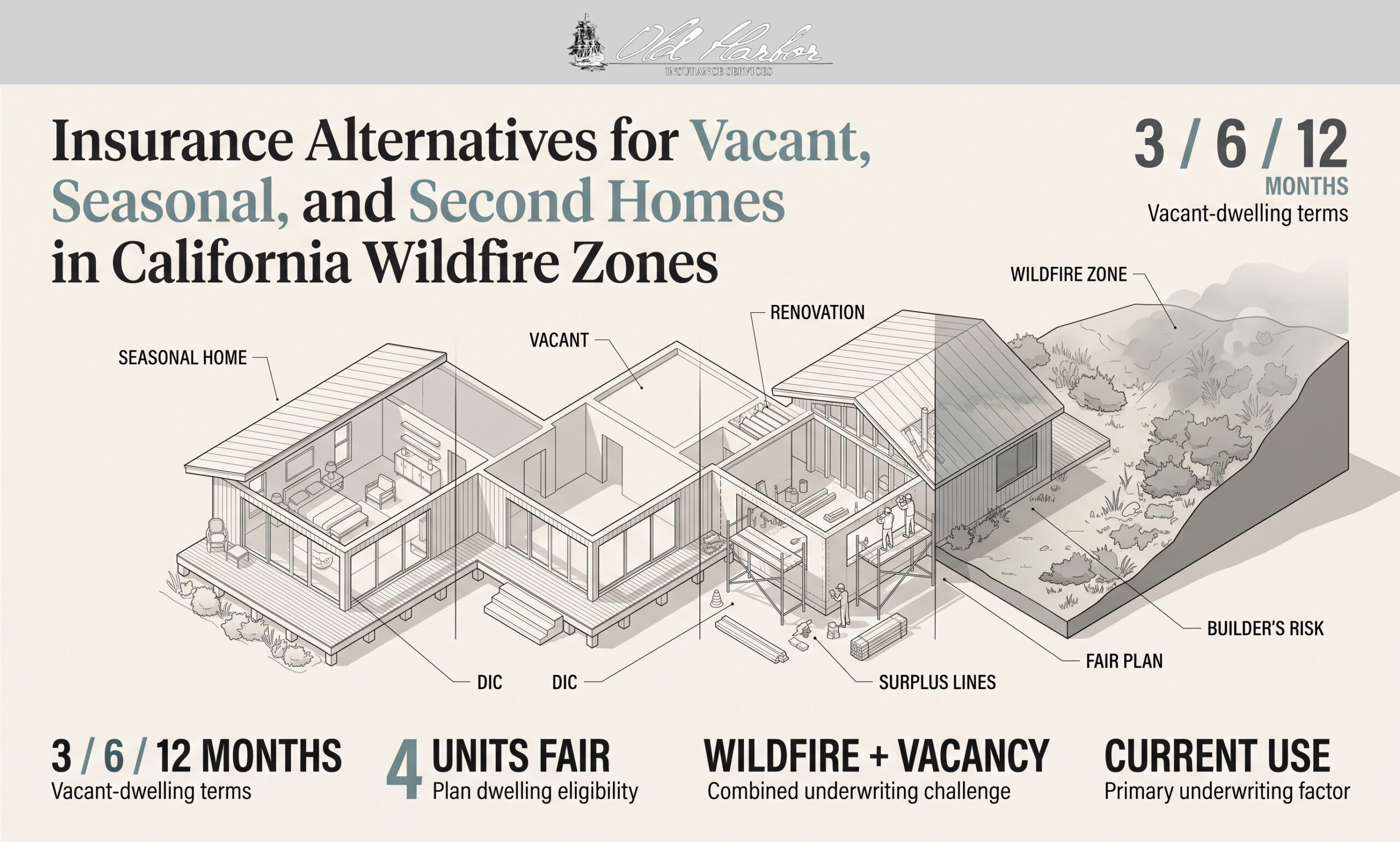
Surplus lines insurers can write nonstandard occupancy, wildfire exposure, high rebuilding values, prior losses, or unusual construction. Vacant-dwelling forms may be offered for three, six, or twelve months and may allow cancellation when the home sells or becomes occupied, subject to minimum-earned-premium terms.
Coverage can be named-peril rather than open-peril. Owners should compare fire, wind, water, theft, vandalism, liability, other structures, ordinance and law, debris removal, replacement-cost conditions, and the deductible for each cause of loss.
When the California FAIR Plan Fits and Where It Stops
The California FAIR Plan provides basic fire insurance when traditional coverage is not reasonably available. Its dwelling program can be used for owner- or tenant-occupied buildings with up to four units, but eligibility and coverage depend on the property’s use and condition.
Vacancy Requires Accurate Disclosure and Special Treatment
The FAIR Plan’s dwelling application checklist states that vacant or unoccupied buildings face coverage restrictions and exclusions. It also says a Vacancy Permit Endorsement is needed for vandalism or malicious-mischief coverage and asks detailed questions about locks, broken windows, trespass, condition, remodeling, and the expected end of vacancy.
A vacancy permit does not turn basic fire insurance into a standard homeowners policy. The declarations and endorsements still need to be tested against water damage, theft, liability, contents, loss of use, and other risks.
A DIC Policy Can Fill Some FAIR Plan Gaps
A Difference in Conditions policy is designed to sit beside a FAIR Plan policy and add eligible coverages absent from the fire form. The FAIR Plan’s DIC explanation directs owners to work with a broker when broader protection is needed.
The two policies should be reviewed as a pair. Effective dates, dwelling values, loss settlement, deductibles, exclusions, and claims notice obligations need to align, because neither carrier automatically corrects a gap created by the other form.
Renovation and Estate-Sale Situations Need Separate Planning
A home undergoing structural work can fall outside both ordinary homeowners and simple vacant-dwelling appetite. Builder’s risk or course-of-construction coverage may be needed for the existing structure, new work, materials, temporary storage, and changes in value.
Contractors Do Not Replace the Owner’s Property Insurance
A contractor’s general liability policy addresses certain injury and property-damage claims arising from the contractor’s operations. It does not insure the owner’s entire building or guarantee payment for faulty work. Owners should collect certificates, verify licenses, and confirm who bears risk for materials and partially completed work.
If a loss occurs, prompt notice, photographs, access logs, invoices, and repair records support the property-claim process. A caretaker should know how to reach the insurer and protect the building from further damage.
A Home for Sale Can Change Classification Over Time
An occupied listing may remain suitable for homeowners coverage. Once furniture is removed and the owner stops staying there, the insurer may classify it differently. The policy should be reviewed again if the listing is withdrawn, a tenant moves in, renovation begins, or the property becomes part of an estate.
Risk Controls That Help an Empty or Seasonal Home
- Central-station fire and burglar alarms with current certificates
- Automatic water shutoff and leak sensors
- A local caretaker with a written inspection schedule
- Maintained utilities, heat, pumps, and backup power as required
- Defensible space, clean roofs and gutters, and documented brush work
- Locked gates and clear access for fire apparatus
- Mail, waste, and landscaping managed so the property does not appear abandoned
- Photographs and visit logs retained after each inspection
These controls can reduce loss severity, but they do not override policy wording. If an endorsement requires weekly inspections or a functioning alarm, failure to meet the condition can matter at claim time.
How Old Harbor Insurance Helps
Old Harbor Insurance separates occupancy from hazard instead of treating “second home” as a complete underwriting description. The agency can compare admitted, specialty, surplus lines, vacant-dwelling, builder’s risk, and FAIR Plan plus DIC structures based on how the property is used.
The review also considers lender requirements, expected vacancy duration, wildfire mitigation, reconstruction cost, contents, liability, and the exit plan. A temporary policy should make it possible to move cleanly when the home sells, work finishes, or regular occupancy resumes.
Match the Policy to the Property’s Current Use
An empty house can change category faster than an annual renewal cycle. Contact Old Harbor Insurance before occupancy or construction changes, or request a quote for coverage structured around the property’s present condition.
Frequently Asked Questions
Can a trust or estate insure a vacant California home?
A trust or estate can insure a vacant home when the named insured and insurable interest are documented correctly. The executor, trustee, beneficiaries, and any lender should be identified as required by the carrier.
Does homeowners insurance cover a house while the owner is in assisted living?
Coverage depends on whether the move is temporary, whether the home remains furnished, and how the policy defines vacancy or unoccupancy. The insurer should be notified before a prolonged absence changes the risk.
Can a seasonal home be rented occasionally without changing insurance?
Occasional rental can change eligibility and coverage even when the home remains primarily personal-use. The owner should disclose rental frequency, platforms, lease terms, and services rather than relying on incidental-rental assumptions.
Does a vacant-home policy cover personal belongings left inside?
A vacant-home policy may offer limited or optional personal-property coverage. The declarations should show whether contents are insured at replacement cost or actual cash value and whether theft is included.
Will shutting off the water preserve coverage during an absence?
Shutting off and draining water can reduce loss severity but does not by itself preserve coverage. The policy may also require heat, inspections, alarms, or a specific vacancy endorsement.
Can a lender force-place insurance on a vacant second home?
A lender can obtain force-placed coverage if it believes acceptable hazard insurance has lapsed or no longer meets the mortgage terms. Proof of replacement coverage should be sent promptly to avoid overlapping charges.
Is flood damage covered by wildfire or vacant-home insurance?
Flood is generally excluded from homeowners, FAIR Plan, and vacant-dwelling policies. Owners can check the FEMA Flood Map Service Center and evaluate a separate flood policy, including post-wildfire debris-flow exposure.