
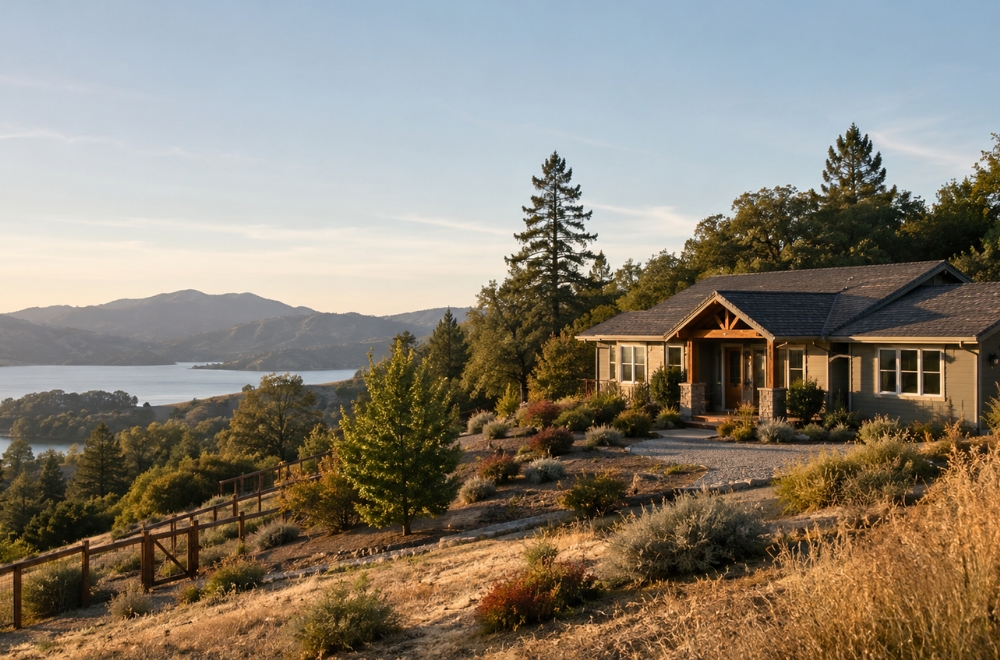
In 2025, Cal Fire significantly expanded Lake County’s fire hazard maps, adding several thousand acres to “very high” risk zones near Clearlake and Lakeport.
The risk zone’s change followed two of the most destructive wildfires in California’s recent history: the 2015 Valley Fire and the 2018 Ranch Fire, part of the Mendocino Complex. Securing home insurance in Lake County has become increasingly difficult, and Old Harbor Insurance helps homeowners navigate the available options.
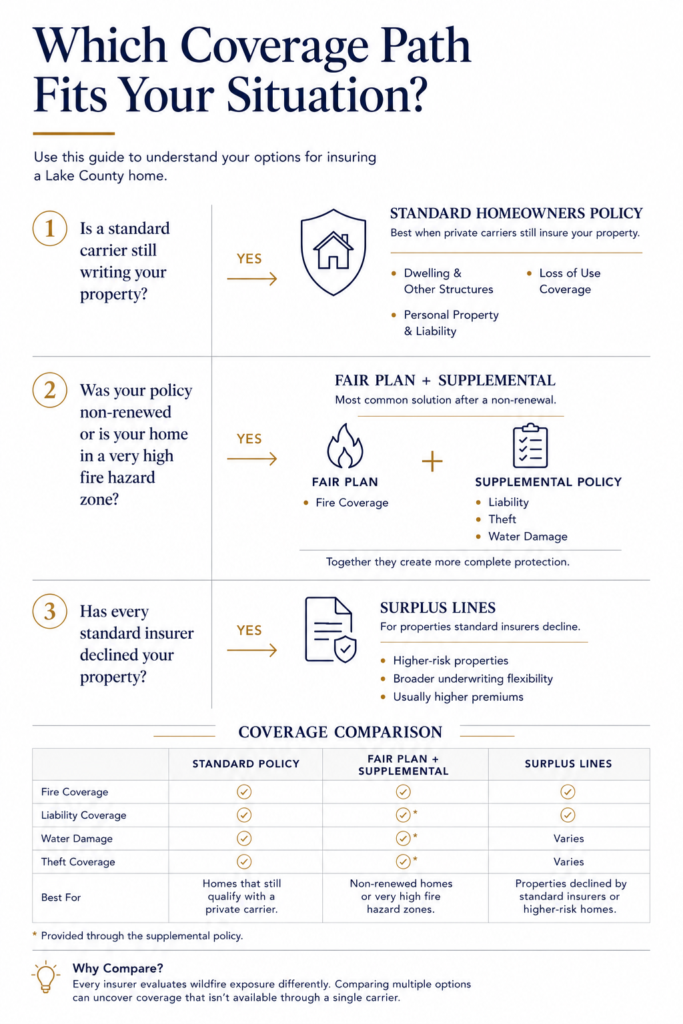
Homeowners facing non-renewal are not restricted solely to the California FAIR Plan, though it frequently becomes the default solution. A brief consultation with an independent agent can determine whether a standard carrier, a surplus-lines policy, or the FAIR Plan combined with a supplemental policy is most suitable, particularly when considering factors like rebuilding costs and property location.
Why Lake County’s Insurance Market Has Tightened
Valley Fire and the Mendocino Complex
The 2015 Valley Fire burned 76,067 acres and destroyed 1,958 structures across Lake, Napa, and Sonoma counties, according to Lake County’s own account of the disaster.
Three years later, the Ranch Fire, part of the Mendocino Complex, burned 410,203 acres across Lake, Mendocino, Glenn, and Colusa counties and destroyed 246 more structures, per Cal Fire’s incident record. Both fires reshaped how carriers assess risk in the county.
Expanding Fire Hazard Severity Zones
Cal Fire’s 2025 hazard map update pushed the county’s “very high” fire hazard acreage from about 1,588 acres to more than 15,500, according to reporting from Lake County News.
Local officials have noted the assessment project’s risk over 30 to 50 years and does not account for recent fuel reduction or home hardening work. Even so, insurers use these zones when deciding where to write new policies.
What Standard Home Insurance Covers in Lake County
A standard homeowners policy in Lake County typically bundles coverage for the dwelling, other structures like a detached garage or barn, personal property, and liability for injuries on the property. Loss of use coverage pays for temporary housing if a covered loss, such as a wildfire, makes the home unlivable while it’s rebuilt and any claim is processed.
Ordinance or law coverage, which pays the added cost of rebuilding to current building code, is worth checking closely, since fire-zone building requirements have changed considerably since many county homes were first built.
The California FAIR Plan in Lake County
What the FAIR Plan Does and Doesn’t Cover
When standard carriers won’t write a policy, the California FAIR Plan is often the only option left for a Lake County property. FAIR Plan coverage is limited to fire, and by itself does not include liability, theft, or water damage, which is why most agents pair it with a supplemental policy that fills those gaps. For homes in the highest hazard zones, that combination is frequently what keeps a mortgage in compliance.
The One-Year Non-Renewal Moratorium
When the Governor declares a wildfire emergency, California’s one-year moratorium bars insurers from canceling or non-renewing a policy based on wildfire risk alone for homes inside or near the fire perimeter.
The California Department of Insurance issues a bulletin naming the protected ZIP codes, and the protection can reach back to cover cancellations issued up to 90 days before the declaration. It does not, however, prevent a non-renewal once that year ends.
Alternatives to the FAIR Plan for Lake County Homeowners
California’s Sustainable Insurance Strategy now requires insurers that use wildfire catastrophe modeling in their rates to also commit to writing a set share of policies in wildfire-distressed areas, part of an effort to bring standard carriers back into high-risk counties like Lake.
The California Department of Insurance reports six homeowners insurance groups have expanded their California writing under the new framework, up from zero the year before.
Surplus lines carriers, which operate outside the standard admitted market, are another option for Lake County properties a standard insurer won’t touch, generally at a higher premium and with fewer state protections.
An independent agent who works across both markets can compare a FAIR Plan and supplemental combination against a surplus-lines quote side by side, rather than defaulting to whichever option comes up first.
How Old Harbor Insurance Helps
Old Harbor Insurance is an independent agency representing over 80 A-rated carriers. By accessing both standard admitted insurers and the surplus lines market, the agency ensures Lake County properties are evaluated across multiple coverage types.
This extensive reach is critical when standard carriers restrict writing in specific ZIP codes while remaining active in adjacent areas.
Agents provide detailed consultations on FAIR Plan coverage limitations before recommending tailored supplemental policies. Additionally, the agency monitors carriers re-entering the Lake County market as California’s new participation requirements take effect.
Get Your Lake County Home Properly Covered
A property that lost its carrier after the 2015 or 2018 fires may have different options today than it did even two years ago, as more insurers re-enter high-risk ZIP codes under the state’s new rules.
Contact Old Harbor Insurance to check what’s currently available for a specific Lake County address, or request a quote to compare the FAIR Plan against standard and surplus-lines options.
Frequently Asked Questions
Does the FAIR Plan cover mudslide or landslide damage after a wildfire burns the hillside above a home?
The California FAIR Plan covers fire damage only and generally excludes mudslides, landslides, and debris flow, even when a recent wildfire stripped away the hillside vegetation that would normally hold soil in place. A supplemental policy or endorsement is typically needed to cover that kind of secondary damage. Lake County properties below steep, recently burned slopes are often the ones most exposed to this gap.
Does a Lake County home near Clear Lake need separate flood insurance in addition to fire coverage?
Lenders typically require flood insurance only when a home sits inside a FEMA-designated Special Flood Hazard Area, which includes some low-lying parcels along Clear Lake’s shoreline. Neither a standard homeowners policy nor the FAIR Plan covers flood damage, so that coverage has to be purchased separately through the National Flood Insurance Program or a private flood carrier. A property’s flood zone status can be checked through FEMA’s map service before assuming it isn’t needed.
Do insurers in Lake County offer discounts for defensible space or a Wildfire Prepared Home certification?
Some carriers writing in Lake County offer premium credits for defensible space, ember-resistant vents, and other home-hardening steps, though the discount amount and qualifying steps vary by insurer. A Wildfire Prepared Home designation, which requires a third-party inspection, tends to carry more weight with insurers than self-reported mitigation. Not every carrier in the area recognizes the same certifications, so it’s worth asking before doing the work.
Does standard homeowners insurance cover smoke damage to a house that never caught fire?
Standard homeowners policies generally do cover smoke damage as a named peril, even when the structure itself never burned. Cleaning costs for HVAC systems, insulation, and belongings affected by smoke infiltration are typically included under the personal property and dwelling sections of the policy. Documentation of the smoke exposure and any resulting damage helps support that type of claim.
Does homeowners insurance cover a dock or boathouse on a Clear Lake waterfront property?
A dock, boathouse, or similar structure on a Clear Lake waterfront property is typically covered under the other-structures portion of a standard homeowners policy, though the covered percentage varies by carrier. Structures built over or next to water sometimes carry exclusions for wave action or water-level damage that wouldn’t apply to a garage on dry land. Waterfront owners should confirm how their policy treats a structure partially over water before assuming standard limits apply in full.
Are seasonal or vacation homes near Clear Lake eligible for standard coverage, or do they need the FAIR Plan?
Seasonal and vacation homes can qualify for standard coverage in some cases, but insurers often apply stricter underwriting to homes that sit vacant for extended periods, especially in high fire hazard zones. Some standard carriers decline vacant or seasonal properties outright, pushing them toward the FAIR Plan regardless of the home’s specific risk profile. A local agent can clarify which carriers still consider seasonal Lake County properties.
How long does the FAIR Plan take to issue a policy after a standard carrier non-renewal in Lake County?
FAIR Plan applications are typically processed within a few business days once the application and payment are submitted, since the plan does not require the same underwriting review as most standard carriers. Coverage can often be bound quickly enough to avoid a lapse if the application is submitted before the prior policy’s non-renewal date takes effect. Waiting until after a lapse occurs can complicate the timeline and may affect a mortgage requirement.