
Seventy percent of the homes destroyed in the Eaton Fire’s Altadena burn scar are still stuck in rebuilding limbo more than a year and a half after the fire, largely because of insurance complications, according to research from UCLA’s Latino Politics and Policy Institute. Old Harbor Insurance works with homeowners in that middle stretch, where the California FAIR Plan alone rarely covers everything a rebuild still needs.
A FAIR Plan policy pays for fire damage to what’s left of a property, but it doesn’t extend to a cleared lot, a home under active construction, or the extra months of temporary housing a slow permit adds on top of the original estimate.
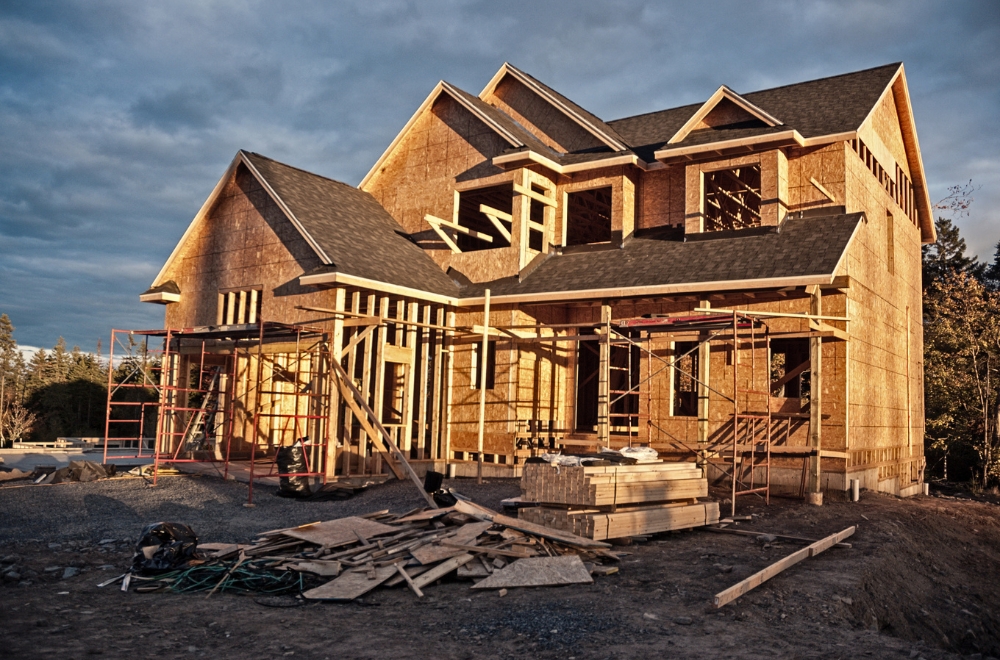
Altadena’s rebuild has moved past that first stage: demolition and new construction are now happening on the same block, sometimes the same week, and the insurance question isn’t what the original claim paid out, it’s what covers a household through everything still left to build.
The Eaton Fire Rebuild Is Still Underway in Altadena
Altadena logged more than 13,600 building permits in 2025, the year after the fire, compared with roughly 4,600 the year before, with demolition and new construction happening on overlapping timelines rather than one after the other, according to permit-data research from Shovels.
That’s roughly a threefold jump, and it also means a large share of Altadena properties are sitting in some unfinished state at any given point: a cleared lot, a framed shell, a partially occupied home.
Nearly a quarter of the permits filed in 2025 were still listed as in review by year’s end, and the UCLA research traces most delays back to insurance settlements, financing, and contractor availability rather than the permitting process itself. An insurance policy written for the original, undamaged home rarely matches what a property looks like partway through that timeline.
What Insurance Has to Cover During an Active Rebuild
Additional Living Expense Runs on a Clock That Doesn’t Match the Rebuild Pace
California requires insurers to provide at least 24 months of Additional Living Expense (ALE) coverage after a declared wildfire emergency, extendable to 36 months for construction delays, but many households hit their policy’s dollar limit well before the clock runs out, according to EmberPro’s review of ALE coverage gaps.
A monthly ALE cap of $3,500 doesn’t stretch far against Altadena-area rents that have climbed since the fire, and the shortfall lands on the household once the payout runs dry.
A Cleared Lot Still Needs Coverage Before Construction Starts
A cleared lot between demolition and groundbreaking still carries risk: debris, retaining walls, utilities, and whatever materials get staged on-site need liability and property coverage of their own until a builders risk policy takes over once framing starts.
Letting that coverage lapse instead of converting it is one of the more common mistakes on a stalled rebuild, and an easy one to miss when a homeowner is also sorting out permits, contractors, and financing.
Like-For-Like Rebuilds Still Have to Meet Current Building and Fire Code
Los Angeles County’s like-for-like rebuild policy lets Eaton Fire rebuilds skip current zoning rules if the new structure stays within 10 percent or 200 square feet of the original footprint, according to LA County Recovers, but that exemption doesn’t extend to Building, Fire, or Health and Safety codes.
Meeting current fire code on a home originally built decades ago almost always pushes rebuild costs past what a typical ordinance or law limit was sized for, whether or not the rebuild otherwise qualifies as like-for-like.
Alternatives to Relying on the FAIR Plan Alone for a Rebuild
Moving From FAIR Plan to Builders Risk Once Construction Starts
A FAIR Plan or standard homeowners policy is built to insure a finished structure, not a framed shell mid-construction, so most rebuilds need a separate builders risk policy once real work begins on-site.
Timing that handoff, so the FAIR Plan or standard policy covers the lot while builders’ risk covers the structure going up, avoids the overlap or lapse that shows up when nobody plans for the switch.
AB 2038 Would Extend Non-Renewal Protection, But Hasn’t Passed Yet
California’s original one-year non-renewal moratorium for Eaton Fire survivors expired in January 2026, and a bill known as AB 2038 would extend that protection to two years for homes in the fire perimeter and three years for a declared total loss, up from the current one- and two-year terms, according to United Policyholders.
The bill cleared the Assembly Insurance Committee in April 2026 and was still moving through the Senate as of this writing, so a homeowner can’t yet count on it applying to their policy.
How Old Harbor Insurance Helps
An Altadena rebuild rarely stays on one insurance policy from the cleared lot to the finished home, and Old Harbor Insurance helps line up FAIR Plan, builders risk, and standard homeowners coverage so nothing gets left uncovered between stages. That sequencing matters most for households already stretched thin by ALE limits and permit delays.
Which admitted carriers are re-entering specific Altadena ZIP codes shifts as rebuilds finish and mitigation work gets documented, and a property that couldn’t get standard coverage a year ago sometimes qualifies again once construction is done. Reviewing what a claim covers before the current policy renews catches changes a homeowner might otherwise miss.
Get Your Altadena Rebuild Properly Covered
A policy bought for a home that no longer exists, or a builders risk policy nobody converted once construction finished, leaves an Altadena rebuild exposed right when it’s closest to finished.
Contact Old Harbor Insurance to review coverage no matter what stage the rebuild has reached, or request a quote to compare FAIR Plan, builders risk, and standard options.
Frequently Asked Questions
Does a FAIR Plan policy stay in effect on an Altadena lot after the house is demolished but before rebuilding starts?
A FAIR Plan policy written for a destroyed structure typically has to be converted to vacant-land or builders risk coverage once demolition is complete, because the original policy was rated for a structure that no longer exists.
The policy doesn’t cancel on its own, but nobody updates it to match the lot’s new status without a call to the carrier or agent. A property sitting untouched for months between demolition and permits is exactly when this conversion gets missed.
What happens if Additional Living Expense benefits run out before an Altadena rebuild is finished?
Once ALE benefits are exhausted, either the dollar limit or the extended time period, the household covers temporary housing costs directly until the rebuild is done. Some carriers grant a further extension case by case, particularly when a documented permit delay rather than the homeowner’s own pace is holding up construction. Putting that question to a carrier in writing, well before the standard 24 months run out, gets a clearer answer than asking after the fact.
Does AB 2038 apply retroactively to Eaton Fire survivors whose one-year moratorium protection already expired in January 2026?
AB 2038 hadn’t passed as of this writing, so it isn’t yet clear whether an extended moratorium would reach back to cover homeowners whose original one-year protection already lapsed.
Legislation extending disaster-related insurance protections has applied retroactively in some past California wildfire recoveries, though that outcome isn’t guaranteed here. A homeowner whose protection already expired should treat their current coverage status as what applies until the bill passes and its effective terms are published.
Does a like-for-like rebuild under LA County’s expedited process still need ordinance or law coverage?
A like-for-like rebuild still needs ordinance or law coverage, since the zoning waiver only removes certain size and setback rules, not the requirement to meet current Building, Fire, and Health and Safety codes.
Bringing a decades-old home up to current fire code standards almost always costs more than the original structure’s ordinance or law limit anticipated. Confirming that limit before construction pricing is finalized avoids discovering the shortfall mid-project.
Can builders risk coverage be added directly onto an existing FAIR Plan policy, or does it require a separate policy?
Builders risk coverage is written as its own separate policy rather than an endorsement added onto an existing FAIR Plan or standard homeowners policy. The two policies typically run concurrently for a short overlap, with the FAIR Plan or standard policy covering the land and any salvageable structure while builders’ risk covers the active construction. Timing the builders risk policy’s start date to when framing starts on-site avoids paying for overlapping coverage longer than necessary.
Does rebuilding to a larger footprint than the original home, beyond LA County’s 10 percent or 200 square foot like-for-like threshold, change what insurance is required?
Exceeding the like-for-like threshold moves a project into LA County’s standard zoning review, which typically extends both the construction timeline and how long a household needs temporary housing coverage.
The larger structure also needs a higher builders risk and dwelling limit than a like-for-like rebuild would, because the finished home is simply worth more than what burned. Flagging the expanded scope to an agent before construction starts keeps coverage sized for the real project instead of the original one.
Does selling a fire-damaged Altadena lot instead of rebuilding affect what insurance the new buyer can get?
A vacant, fire-cleared lot sold to a new owner typically needs its own vacant-land liability policy until that owner is ready to build, separate from whatever coverage the previous owner carried.
The new owner starts their own timeline for any post-fire moratorium or FAIR Plan protections tied to the original policy, because those protections generally follow the policyholder, not the property. Buyers of fire-cleared lots in Altadena should confirm what, if anything, carries over from the seller’s policy instead of assuming it does.