
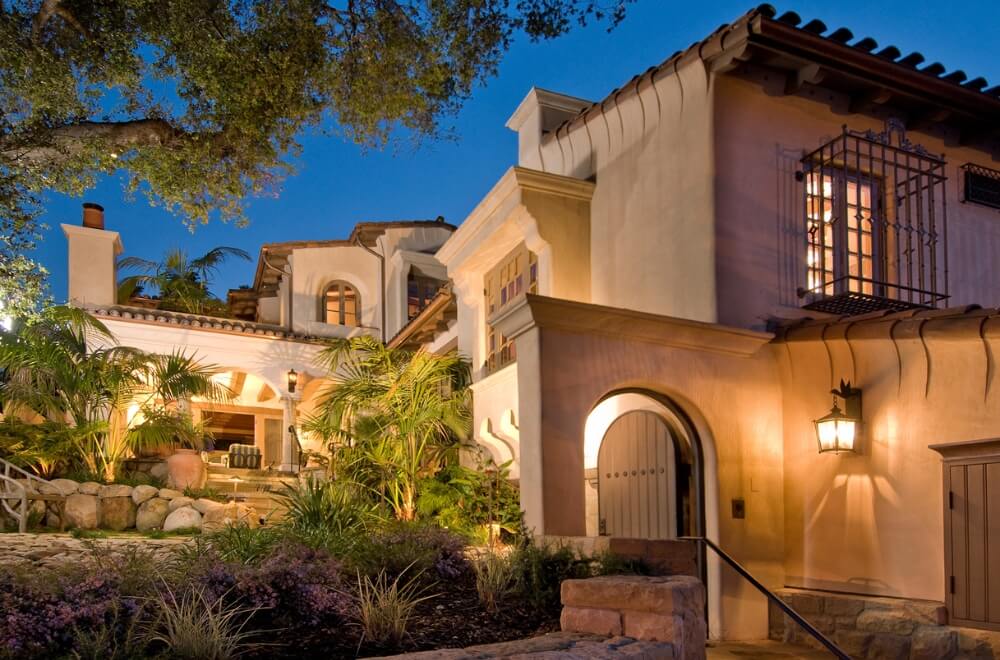
Rancho Santa Fe combines high-value residences, long private drives, mature landscaping, guest structures, equestrian property, and a wildland setting within North County San Diego. That mix makes Rancho Santa Fe insurance different from a standard suburban homeowners placement. Old Harbor Insurance approaches the area as an estate-risk problem, where the home, detached buildings, valuables, liability exposures, and evacuation conditions need to work together under one coverage strategy. A gate, stable, pool house, or collection can change the loss picture even when the main residence has not changed.
A strong policy begins with a realistic reconstruction estimate and an accurate picture of the property as it operates now. Renovations, solar systems, backup power, domestic staff, horses, collections, and brush exposure can all change the underwriting file. Old Harbor can compare Rancho Santa Fe insurance options before a renewal or purchase deadline turns those details into last-minute obstacles. The review should also test what happens if rebuilding takes longer than expected or temporary living costs exceed a standard allowance.
Why Rancho Santa Fe Insurance Requires Estate-Level Underwriting
The insured value of an estate is not the same as its sale price. Land value does not burn, but custom millwork, stone, imported finishes, architectural fees, debris removal, and code-compliant rebuilding all affect the amount needed after a total loss. A policy based on a generic cost-per-square-foot estimate may leave a large gap even when the dwelling limit looks substantial.
Rebuilding a Custom Home Takes More Than a Dwelling Limit
Extended or guaranteed replacement-cost language can provide a buffer above the stated dwelling limit, but the percentage, eligibility rules, and conditions vary. High-value policies may also address cash settlement, matching undamaged finishes, landscaping, equipment breakdown, and temporary living arrangements at a level closer to the household’s normal standard.
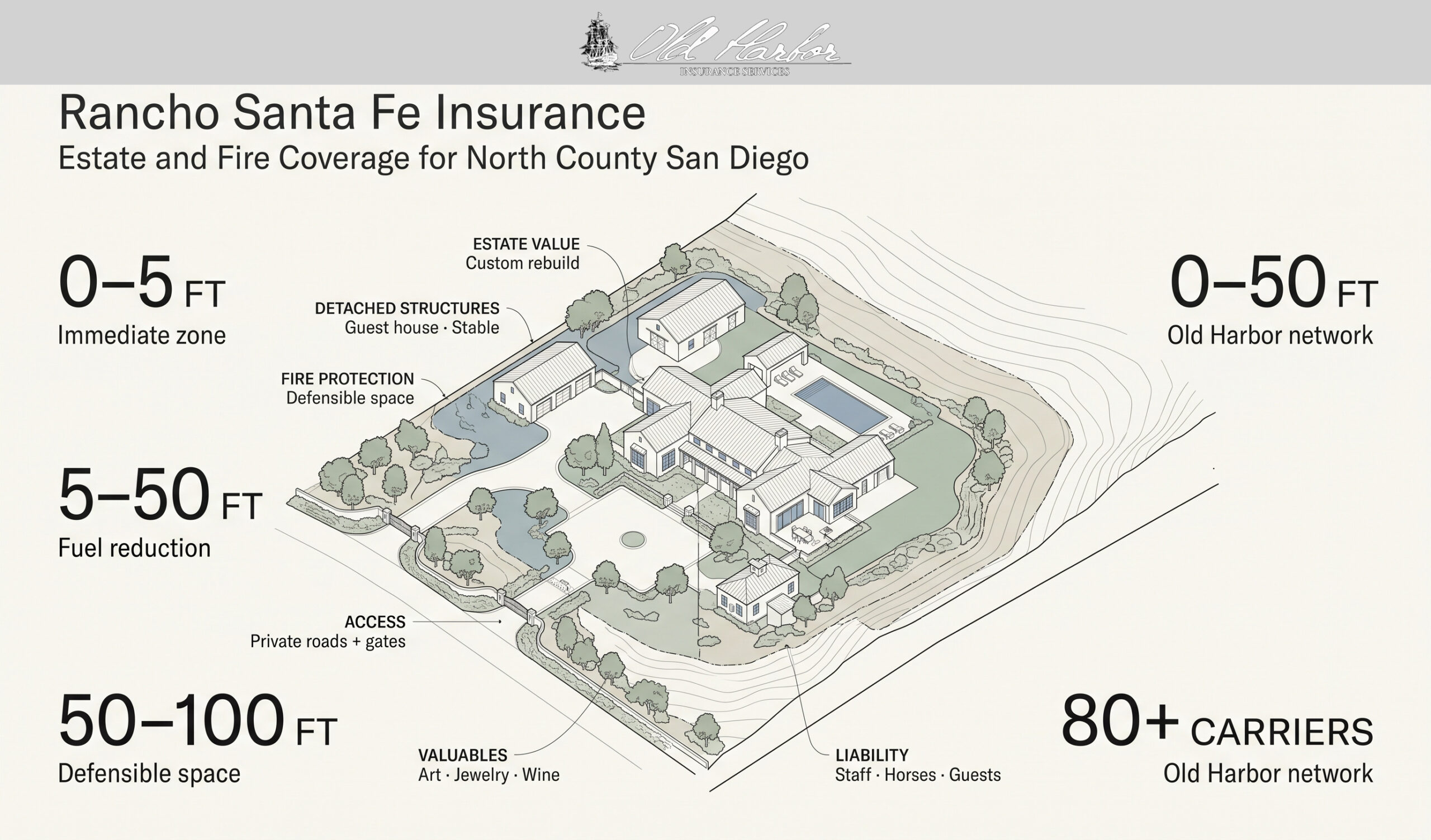
The estimate should include accessory structures individually. A guest house with a kitchen, pool house, stable, detached garage, gatehouse, wine room, or staff quarters may not fit comfortably inside a default “other structures” percentage. Scheduled limits make the policy easier to test before a claim.
Private Roads, Gates, and Water Supply Affect Fire Response
Rancho Santa Fe’s local fire review considers hydrant location and fire flow, driveway length and grade, turnarounds, access gates, slope setbacks, and fuel-modification zones. The Rancho Santa Fe Fire Protection District’s plan-submittal requirements show why an insurer may ask questions that seem unrelated to the house itself. Fire apparatus needs reliable access, and a long driveway or narrow gate can influence how the risk is modeled.
Private hydrants, water tanks, pumps, generators, and monitored alarms should be documented with maintenance records. Their presence does not guarantee acceptance, but underwriters cannot credit protections they cannot verify.
Fire Coverage for Rancho Santa Fe Homes and Estates
A homeowners policy generally covers direct fire damage when the cause is not excluded, subject to the deductible and limits. The harder question is whether every part of a large property is described correctly and whether post-loss costs such as debris removal, ordinance and law, landscaping, and additional living expense are large enough for an estate-scale loss. Understanding how a property claim moves from notice to payment also helps owners preserve inventories, estimates, and proof of improvements before they are needed.
Defensible Space Is Both a Safety and Underwriting Issue
The Rancho Santa Fe Fire Protection District treats vegetation management as a year-round obligation. Its local defensible-space standards divide the first 100 feet around a structure into three zones: 0 to 5 feet, 5 to 50 feet, and 50 to 100 feet. Zone 0 calls for removal of combustible vegetation and debris immediately beside the building, while the outer zones address dead growth, spacing, and fuel reduction.
Photographs, paid invoices, inspection reports, and a current vegetation plan can make mitigation visible to an underwriter. Owners should also document ember-resistant vents, roof condition, enclosed eaves, noncombustible fencing near the house, trimmed branches, and clear access routes.
Ordinance and Law Coverage Matters After a Partial Loss
Rebuilding can trigger current fire, energy, electrical, sprinkler, and accessibility requirements even when the damaged home was lawful when built. Ordinance and law coverage can address eligible costs tied to demolition of undamaged portions and upgrades required by code. The available limit should be evaluated against the home’s age, construction type, and local permit path rather than accepted as a standard percentage.
Major renovations deserve their own insurance review before work starts. Builder’s risk, course-of-construction restrictions, vacancy, contractor liability, and changed replacement cost can all affect the existing homeowners policy.
Coverage Beyond the Main Residence
Estate insurance should account for property and liability that sit outside the dwelling limit. That may include detached structures, fine art, jewelry, wine, collectibles, golf carts, watercraft, equestrian operations, household employees, and events hosted on the property.
Collections and Equipment May Need Scheduled Coverage
Standard sublimits can be too small for jewelry, art, firearms, silverware, wine, or rare instruments. Scheduling valuable property can broaden covered causes of loss and establish values before a claim. Appraisals should be updated when markets or collections change.
Mechanical systems also warrant attention. Pools, elevators, generators, smart-home controls, well equipment, and large HVAC systems can create losses that ordinary wear-and-tear exclusions leave outside basic property coverage. Equipment-breakdown endorsements may address certain sudden mechanical or electrical failures.
Umbrella and Household-Employment Exposures
An estate can create liability through pools, animals, domestic staff, frequent guests, youth drivers, rental use, and board service. A personal umbrella adds limits above scheduled underlying policies, but only when the home, auto, recreational vehicles, and other required exposures are properly listed.
Household employees can also create workers’ compensation and employment-practices questions. The policy should reflect whether the household uses direct employees, an agency, or independent contractors and what duties they perform.
What Rancho Santa Fe Owners Should Document Before Renewal
- A current reconstruction-cost estimate based on custom finishes and local labor
- A list of guest houses, stables, garages, gates, pools, and other structures
- Roof age, materials, venting, sprinklers, alarms, generators, and water systems
- Defensible-space work, inspection records, photographs, and contractor invoices
- Updated appraisals for art, jewelry, wine, and other scheduled property
- Regular occupancy, seasonal absences, rentals, renovations, and household staff
The local district notes that wildfires are a constant threat in San Diego County and that roads, emergency response, and water service may be affected during a disaster. Its preparedness guidance makes evacuation planning part of property risk management, especially for households with animals, staff, or residents who need assistance.
How Old Harbor Insurance Helps
High-value placements often fail because the submission treats a complex estate like a standard house. Old Harbor Insurance gathers the property details, mitigation evidence, occupancy information, and coverage priorities that underwriters need, then compares admitted, specialty, and surplus-lines possibilities where appropriate.
The review also tests how the home, valuables, umbrella, vehicles, and secondary structures interact. The goal is not simply to find a carrier willing to quote, but to identify where limits, exclusions, deductibles, or scheduling decisions could change the outcome of a large loss.
Build Coverage Around the Estate You Own
A Rancho Santa Fe estate can change materially between renewals through renovations, new structures, collections, staffing, or landscaping. Contact Old Harbor Insurance to review the current program, or request a quote to compare available coverage for the residence and its wider exposures.
Frequently Asked Questions
Does Rancho Santa Fe insurance cover horses kept on the property?
Standard homeowners insurance may provide limited liability for personally owned horses, but exclusions and business-use restrictions vary. Boarding, breeding, training, lessons, or paid events usually require an equine or farm-oriented policy.
Can a homeowners policy cover a guest house used by relatives?
A guest house used by relatives can often be insured, but it should be identified and valued separately. A kitchen, rental arrangement, or separate occupancy may change how the structure must be classified.
Does a monitored security system reduce estate insurance premiums?
A monitored alarm may qualify for a credit with some insurers, but the amount and required certification vary. Fire detection, automatic water shutoff, central-station burglary monitoring, and permanent backup power may be evaluated separately.
Is earthquake damage included in Rancho Santa Fe homeowners insurance?
Earthquake damage is generally excluded from homeowners policies. Owners need a separate earthquake policy or endorsement and should compare dwelling limits, contents coverage, loss of use, and deductibles.
How should a wine collection be insured?
A valuable wine collection should be disclosed and may need scheduled or specialized coverage. The owner should confirm protection for breakage, temperature change, theft, and off-premises transit rather than relying on a general contents limit.
Does hosting a charity event at home change liability coverage?
A private charity event can create liquor, vendor, parking, and premises-liability exposures beyond ordinary social hosting. The homeowner should tell the insurer in advance and confirm whether event coverage or certificates from vendors are required.
Can an insurer require a wildfire inspection before offering coverage?
An insurer can make an inspection or documented mitigation a condition of underwriting. The result may affect eligibility, required repairs, deductibles, or the final premium, so owners should correct factual errors and keep proof of completed work.