
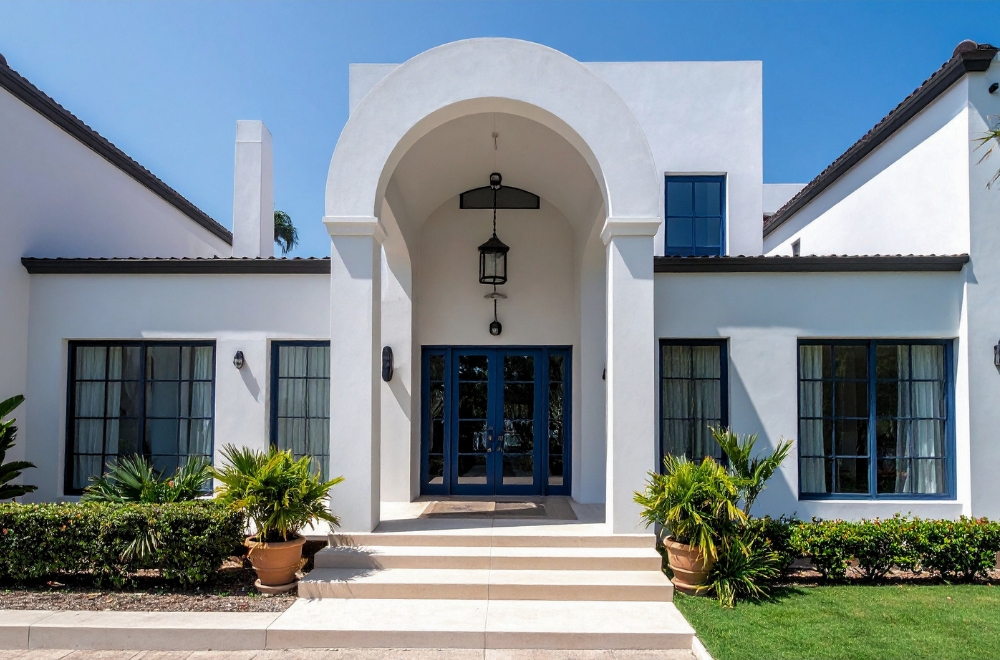
Beaumont has grown faster than almost any other California city in the past two decades, with master-planned communities expanding steadily into the Inland Valley’s eastern foothills. That growth brings a specific insurance challenge: new residents unfamiliar with California’s insurance market, newer homes whose replacement costs aren’t always obvious, and a regional risk profile shaped by wildfire exposure, seismic activity, and a statewide insurance market under significant pressure.
Old Harbor Insurance works across 81 A-rated carriers to help Beaumont homeowners — whether newly arrived or long established — find coverage that reflects what their specific property actually faces.

Why Beaumont’s Growth Creates Unique Insurance Considerations
Beaumont’s rapid expansion has outpaced the insurance education most new residents bring with them. Homeowners arriving from denser California markets, other states, or buying their first home often carry assumptions that don’t hold up in the Inland Empire’s risk environment — most commonly, assuming a purchase price is the right dwelling limit, or that a standard policy covers every California loss.
The city’s ongoing development also means that carrier appetite for Beaumont ZIP codes shifts regularly. Annual re-shopping through an independent agent is the most reliable way to ensure you’re not holding yesterday’s policy in today’s market.
What a Standard Policy Covers
A standard HO-3 homeowners policy covers six core components regardless of where in California you live.
| Coverage Component | What It Protects |
| Dwelling | Structure of your home at replacement cost or ACV |
| Other Structures | Detached garages, fences, sheds |
| Personal Property | Furniture, electronics, clothing, belongings |
| Loss of Use | Temporary housing after a covered loss |
| Personal Liability | Legal defense and damages if someone is injured |
| Medical Payments | Guest injury costs regardless of fault |
Wildfire is a covered peril under standard HO-3 policies. The gap most homeowners encounter isn’t a wildfire exclusion — it’s an inadequate dwelling limit that leaves them short after a total loss. Understanding how claims are settled before a loss is the most practical preparation any homeowner can make.
Market Value vs. Replacement Cost: A Critical Distinction
New residents frequently insure to their purchase price rather than the home’s true replacement cost. Your purchase price includes land, which is not insurable. What the policy needs to cover is the cost to rebuild the structure at current construction prices — labor, materials, permits, and overhead.
Why the Gap Is Larger Than People Expect
According to the Congressional Budget Office’s analysis of climate risk and property insurance, construction costs in California have risen substantially due to general inflation and post-disaster demand surges. A home purchased for $500,000 in Beaumont may cost $600,000–$700,000 or more to rebuild from the ground up. Insuring to purchase price rather than replacement cost leaves a gap that surfaces at exactly the wrong moment.
Extended Replacement Cost Coverage
A standard dwelling limit pays only up to the stated policy amount. Extended replacement cost adds a percentage buffer — typically 25–50% — above that limit when rebuild costs exceed expectations. For Beaumont homeowners in growing communities where post-disaster construction demand can spike quickly, this endorsement is worth serious consideration at every policy review.
Insurance Considerations for Beaumont’s New Master-Planned Communities
Beaumont’s newer developments — including the Four Seasons active adult community and expanding tracts east of the 60 Freeway — contain significant inventory built after 2005. These properties carry real underwriting advantages. Post-2008 California building codes incorporate fire-resistant construction standards, improved roof-to-wall connections, and updated electrical systems that carriers weight favorably.
Smart Home Discounts and Builder Upgrades
Professionally monitored smart home devices — leak detectors, smoke alarms, and security systems — qualify for additional discounts at many carriers. Homeowners in newer developments should also confirm their dwelling coverage reflects the full value of upgrades selected at closing. Builder base prices frequently exclude premium finishes, upgraded flooring, and custom cabinetry — all of which affect actual replacement cost.
Location Still Matters More Than Age
Newer homes in Beaumont’s eastern tracts may sit closer to open terrain than established neighborhoods. An insurer’s wildfire scoring model weights proximity to open space regardless of how recently the structure was built. New construction benefits are real, but they don’t override a property’s location relative to wildland.
Beaumont’s Wildfire Exposure and the 2025 FHSZ Update
Beaumont received its updated Fire Hazard Severity Zone maps on March 24, 2025, under CAL FIRE’s first comprehensive LRA revision since 2007. Homeowners can check their specific address using the Riverside County Fire Department’s FHSZ map. Properties near the San Gorgonio Pass corridor and open terrain carry the highest exposure — Santa Ana wind events in this area can accelerate fire spread rapidly.
According to the CAL FIRE Office of the State Fire Marshal, FHSZ maps assess hazard without accounting for mitigation measures. A property with documented home hardening may present lower actual risk than its zone classification suggests — which is why individual mitigation documentation matters.
How Wildfire Mitigation Improves Your Options
California’s Safer from Wildfires framework requires admitted insurers to offer premium discounts for documented wildfire mitigation. For Beaumont homeowners, the highest-impact steps are:
- Maintaining at least 100 feet of defensible space with documented vegetation clearance
- Installing a Class A fire-resistant roof if the current roof doesn’t already qualify
- Replacing combustible wood vents with ember-resistant alternatives
- Documenting compliance through a defensible space inspection with Riverside County Fire
Carriers increasingly use aerial and satellite imagery to evaluate properties at renewal. Visible mitigation improvements register in those assessments — verbal claims of compliance do not — making official inspection documentation the most reliable way to ensure improvements are reflected in your underwriting outcome.
Coverage Gaps Worth Addressing
Flood
Standard homeowners policies exclude flood damage from external water sources. The Riverside County Flood Control and Water Conservation District maintains flood control infrastructure throughout the region, but properties near drainage channels or lower-elevation areas in newer subdivisions can face flash flood exposure during heavy rain events.
Check your address at the FEMA Flood Map Service Center — infrastructure in newer developments can take time to fully integrate with county flood control systems, creating localized exposure outside official hazard zone boundaries.
Sewer and Water Backup
Sewer backup and drain overflow are excluded from standard policies. In fast-growing communities with expanding infrastructure, backup events from storm surges or drain blockages are a realistic exposure. An endorsement typically costs $50–$150 per year and covers cleanup and repair costs that a base policy leaves entirely on the homeowner.
Earthquake
The California Earthquake Authority provides earthquake coverage through participating residential insurers. Standard policies exclude earthquake damage entirely. Beaumont sits in seismically active Riverside County near the San Jacinto Fault — one of the most active fault systems in Southern California.
The NAIC notes that only a small fraction of California homeowners carry earthquake coverage despite well-documented seismic exposure. For newer Beaumont construction, CEA premiums are typically lower than for older homes.
Building a Home Inventory Before You Need One
New residents unpacking after a move are surrounded by everything they own in one place — that window is the easiest time to document belongings before they’re distributed throughout the home. Walk through each room with your phone, record video, note serial numbers on electronics, and store the file in cloud storage or email. Without documentation, adjusters rely on your memory under stress, and underdocumented claims consistently produce lower payouts.
For homeowners with high-value items — jewelry, art, collectibles, musical instruments — a scheduled personal property endorsement covers those assets at their appraised value above standard sub-limits. The time to add that endorsement is at policy inception, not after a loss.
How Old Harbor Helps Beaumont Homeowners
Whether you are a new resident building your first California homeowners policy or a long-time homeowner reviewing coverage after a premium increase, Old Harbor Insurance works across 81 A-rated carriers to identify what is available for your specific address. That means comparing admitted carriers, surplus lines options, and the right combination of endorsements for your property profile — not defaulting to a single company’s rate.
Contact us to review your current coverage. Get a quote to see what the market currently offers for your home.
Frequently Asked Questions
Does wildfire risk affect home insurance in Beaumont?
Yes. Parts of Beaumont carry FHSZ designations based on the 2025 OSFM update, particularly near open terrain and the San Gorgonio Pass corridor. Insurers use their own property-level models on top of official zone maps, so underwriting outcomes depend on specific characteristics — vegetation proximity, slope, and construction materials — not just the official zone classification.
Do newer homes in Beaumont cost less to insure?
Often yes, relative to older construction. Post-2008 homes benefit from fire-resistive building standards and updated electrical systems that carriers weight favorably. Professionally monitored smart home devices can unlock additional discounts. Location relative to open terrain still affects wildfire risk scoring regardless of construction age.
Is flood insurance required in Beaumont?
Not unless a lender requires it based on a FEMA Special Flood Hazard Area designation for your address. Standard homeowners policies exclude flood damage, and properties near drainage channels in newer developments can face flash flood exposure. Check your address at the FEMA Flood Map Service Center for your specific designation.
What is the difference between replacement cost and market value?
Market value includes land, which cannot be insured, and location factors irrelevant to reconstruction. Replacement cost is what it would actually cost to rebuild your home’s structure at current labor and materials prices. Construction costs have risen significantly in the Inland Empire — insuring to purchase price rather than replacement cost can leave a substantial gap after a total loss.
What endorsements are most valuable for Beaumont homeowners?
Water backup coverage addresses sewer overflow excluded from standard policies. Extended replacement cost protects against construction cost spikes after regional disasters. Earthquake coverage closes the seismic gap that standard policies exclude. For properties near FHSZ areas, confirming your wildfire deductible is a flat dollar amount rather than a percentage of dwelling coverage is also worth verifying.
Should I create a home inventory when I move in?
Yes — and the move-in window is the best time to do it. Walk through each room with your phone, record video of every space and valuable item, note serial numbers on electronics, and store the file off-site. The NAIC recommends this as one of the most effective steps for maximizing a personal property claim. For high-value items, consider a scheduled endorsement that covers them at full appraised value.
How is California’s insurance market changing for Inland Empire homeowners?
California’s Sustainable Insurance Strategy reforms allow carriers to use forward-looking wildfire models and recover reinsurance costs in their rates. Some carriers that restricted new writing in 2022–2024 are returning to Inland Empire markets where updated models show acceptable risk profiles. The UC Berkeley Terner Center frames this as a structural shift rather than a temporary cycle — annual re-shopping through an independent agent is the most reliable way to capture new openings as they develop.